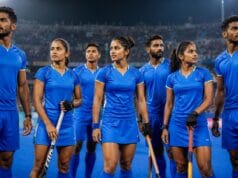


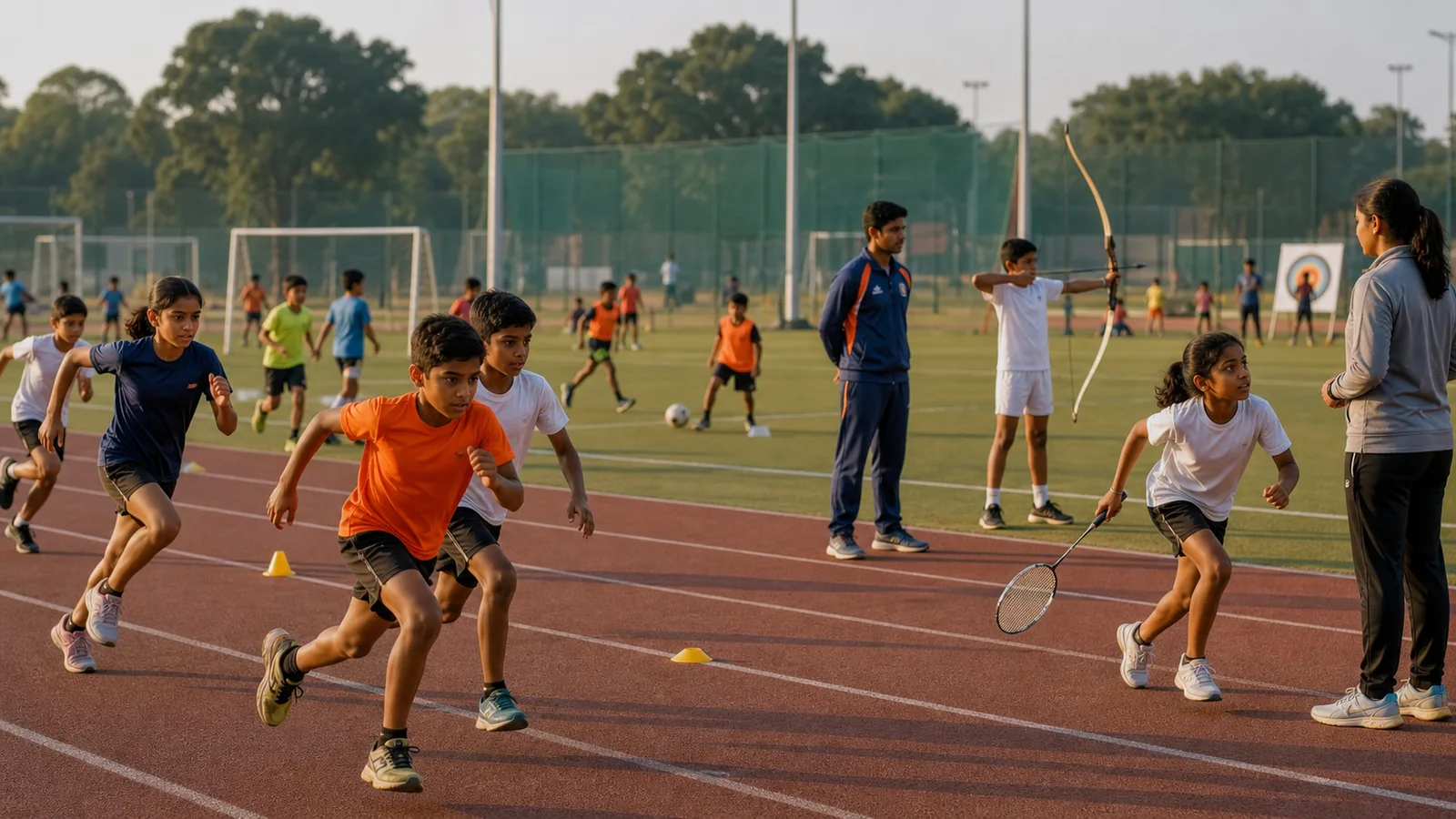
New Delhi, August 15: Prime Minister Narendra Modi has announced a nationwide sports talent hunt to identify young sporting talent, placing children aged five to 15 at the centre of India’s long-term preparations for the 2036 Olympic cycle.
Speaking during his Independence Day address from the Red Fort, Modi said the search would extend across villages, schools and cities, with particular attention to talented girls and children who have limited access to organised sport.
Sports talent hunt: why the 5-15 age group matters
Athletes who are currently between five and 15 would be approaching their competitive prime by 2036 in many Olympic disciplines. Identifying potential early can provide time for age-appropriate coaching, competition experience, sports science support and a gradual transition into high-performance pathways.
The announcement also reflects a wider ambition to expand India’s presence across the Olympic programme. The immediate challenge will be to move from mass identification to sustained development without pushing children into premature specialisation.
India’s existing talent pathway
The proposed drive would build on programmes such as Khelo India and the Target Olympic Podium Scheme. Khelo India includes talent identification and development, while TOPS is designed to support elite athletes with medal potential.
India has also been confirmed as host of the 2030 Commonwealth Games in Ahmedabad, giving the country another major milestone in its broader sporting strategy. However, India has not yet been awarded the 2036 Olympics. The International Olympic Committee is expected to choose the host in 2029.
Implementation will decide the outcome
Finding talented children is only the first stage. The programme’s impact will depend on transparent selection standards, qualified coaches, safe training environments, modern facilities, education support, financial assistance and regular competition.
Long-term monitoring will also be important. Young athletes develop at different rates, and a system that relies too heavily on early physical maturity could overlook children whose potential emerges later.
If the campaign connects grassroots identification with sustained, child-centred development, it could widen access to sport and strengthen India’s athlete pipeline. Its success will ultimately be measured not by the number of children tested, but by how fairly and effectively promising athletes are supported over the next decade.
Image: AI-generated editorial illustration.